
Attic Insulation in Manhattan, KS
Heat rises, and an under-insulated attic is usually the single biggest reason a Flint Hills home feels cold in January and hot upstairs in July. We spray foam attics — floor or roofline — to seal out the temperature swings other insulation types can't stop.
Why the Attic Is Usually the Biggest Problem
Warm air rises, which means an attic sits at the top of every temperature problem a house has. In winter, heat escaping upward through a thin or compressed attic floor is what melts snow on the roof unevenly, refreezes at the eaves, and forms an ice dam that backs water up under your shingles. In summer, that same under-insulated attic bakes in direct sun and radiates heat straight down into the rooms below it.
Most older Flint Hills homes have some attic insulation, but it's often thinner than it should be, compressed flat in places, or full of gaps around framing and penetrations that a batt or blown-in job never fully sealed. Spray foam fixes both problems at once — it insulates and air-seals in the same step, which is the part fiberglass and cellulose can't do on their own.
Attic Floor vs. Roofline Insulation
Which approach makes sense depends on what you actually use the attic for.
Attic Floor (Vented Attic)
Foam goes on the attic floor, keeping the attic space itself vented and close to outside temperature above the insulation line.
- Attic stays unconditioned — good if it's used only for basic storage
- Typically lower cost than a full roofline conversion
- Works well paired with existing soffit and ridge ventilation
Roofline (Conditioned Attic)
Foam is sprayed directly to the underside of the roof deck, bringing the attic inside your home's conditioned envelope.
- Makes the attic usable for mechanical equipment, ductwork, or finished storage
- Closed-cell foam is the standard choice here for moisture control
- See our closed-cell vs. open-cell comparison → for more on foam type
Signs Your Attic Needs Better Insulation
Ice Dams
Ridges of ice at the roof edge in winter, sometimes with water backing up under the shingles.
Hot Upstairs Rooms
Upper floors that stay noticeably warmer than the rest of the house, especially in the afternoon.
High Energy Bills
Utility costs that seem out of proportion to your home's size, especially during extreme weather.
Thin or Old Insulation
Visible insulation that looks compressed, patchy, or clearly hasn't been touched in decades.
See an Attic Job From Start to Finish
Real photos from our own roofline attic conversions — before spraying, and the finished coverage carried all the way to the peak.
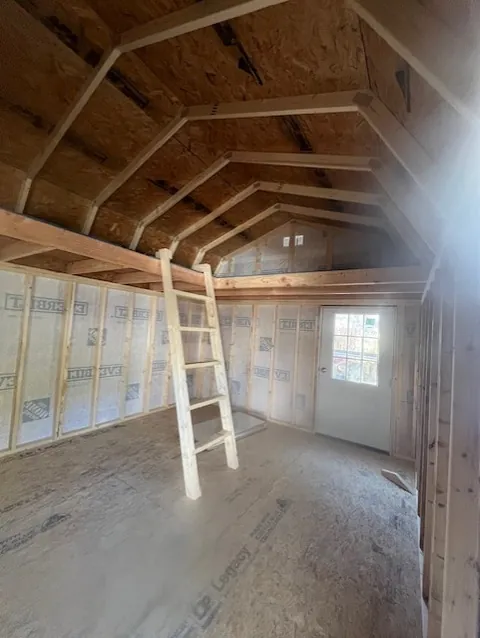
Bare Rafters
Roof deck and rafters exposed, ready for closed-cell foam to be sprayed directly to the underside.
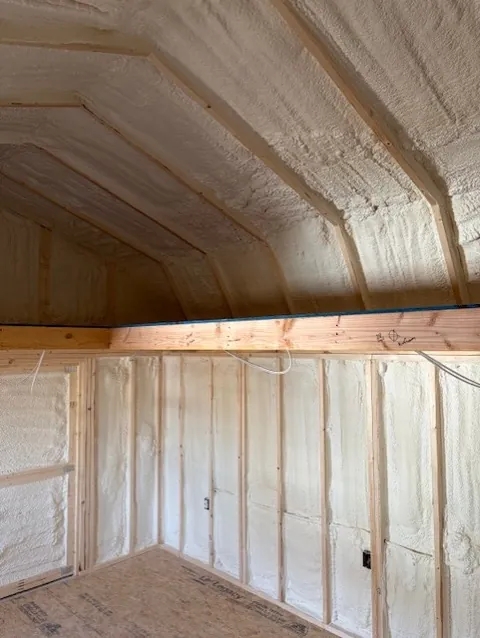
Full Roofline Coverage
Closed-cell foam sprayed across the full roofline and knee walls, converting the attic into conditioned space.
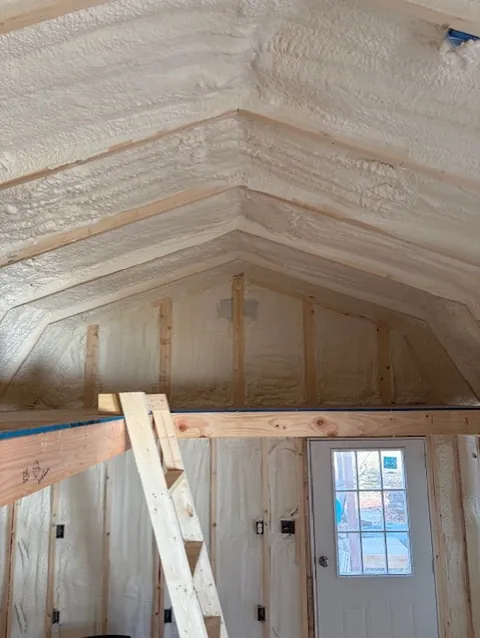
Foam Carried to the Peak
The ridge and peak get the same attention as the flat sections — no gaps left where the roofline meets at the top.
What to Expect on an Attic Job
- 1
Walkthrough
We check existing insulation, ventilation, wiring, and access before recommending floor or roofline coverage.
- 2
Prep
Anything that needs to stay clear — mechanical equipment, stored items, lighting — gets identified and protected.
- 3
Spraying
Foam is applied in controlled passes to reach the thickness needed for your target R-value.
- 4
Cure & Cleanup
We follow manufacturer re-entry times, then clear our equipment and any scrap before we're done.
Attic Insulation: Quick Answers
Should I insulate the attic floor or the roofline?
What are the signs my attic needs better insulation?
How much does attic insulation cost?
Can you spray foam over my existing attic insulation?
Is spray foam insulation guaranteed?
Ready to Stop Fighting Your Attic?
Tell us a little about what's going on up there and we'll call you back — usually the same business day.